SDS Sections: What Each of the 16 Sections Contains

Every Safety Data Sheet follows the same 16-section format. That's not a suggestion — it's a requirement under GHS (Globally Harmonized System) and enforced by OSHA's Hazard Communication Standard. Whether you're looking at an SDS for industrial hydrochloric acid or office whiteboard cleaner, the information is always in the same place.
Here is the problem, though. Most people never read past Section 2. That means they're missing critical information about first aid, storage compatibility, exposure limits, and disposal — information that prevents injuries and keeps you compliant.
What Are the 16 Sections of a Safety Data Sheet?
The 16 sections of an SDS provide a complete profile of a chemical product, from basic identification through ecological and disposal information. Sections 1-8 cover the information most relevant to daily workplace use: what the chemical is, its hazards, first aid measures, firefighting procedures, spill response, safe handling, and exposure controls. Sections 9-16 provide technical data on physical properties, stability, toxicology, ecology, disposal, transport, and regulatory classification. OSHA enforces Sections 1-8 and 12-15, while Sections 9-11 and 16 are maintained by the manufacturer.
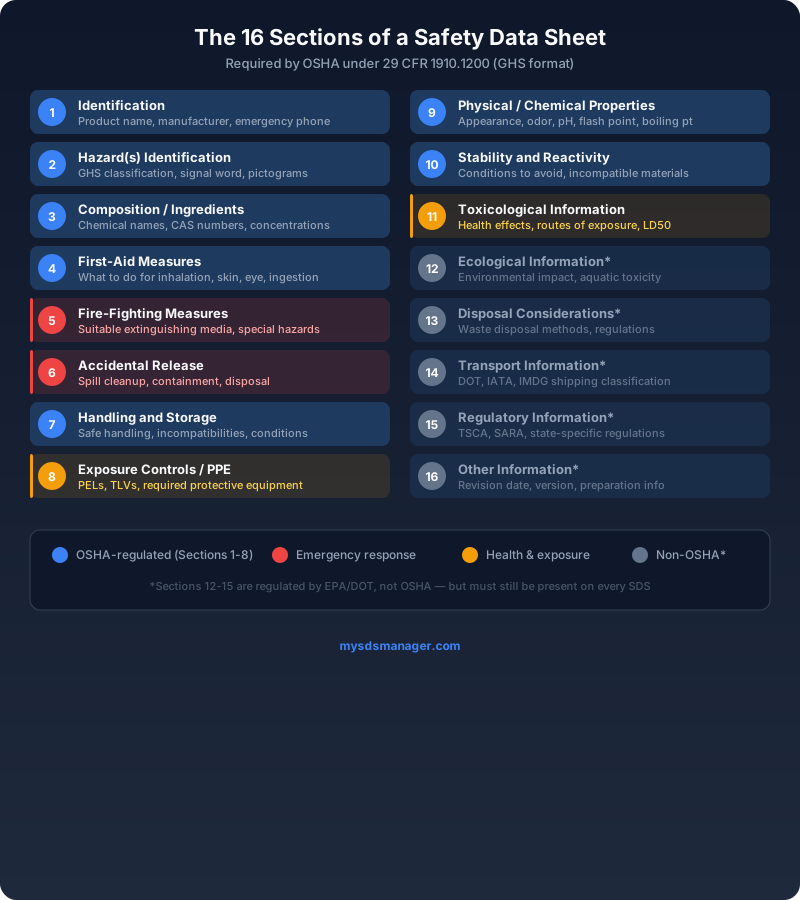
| Section | Title | Key Content | Who Needs It Most |
|---|---|---|---|
| 1 | Identification | Product name, manufacturer, emergency phone | Everyone |
| 2 | Hazard(s) Identification | GHS classification, signal word, pictograms | Everyone |
| 3 | Composition/Ingredients | Chemical ingredients, CAS numbers, concentrations | Safety managers, medical staff |
| 4 | First-Aid Measures | Treatment by exposure route (eyes, skin, inhalation, ingestion) | All workers, first responders |
| 5 | Firefighting Measures | Extinguishing media, special hazards, firefighter PPE | Fire teams, emergency responders |
| 6 | Accidental Release | Spill cleanup, containment, environmental precautions | Spill response teams, all workers |
| 7 | Handling and Storage | Safe handling practices, incompatible materials, storage conditions | Warehouse staff, anyone handling |
| 8 | Exposure Controls/PPE | PELs, TLVs, engineering controls, required PPE | Safety managers, all workers |
Sections 1-8: What You Need for Daily Operations
These are the sections your workers interact with most, and they deserve the most attention in training:
- Section 1 — Identification: Confirms you have the right SDS for the right product. Includes the emergency phone number you'll need during an incident
- Section 2 — Hazard Identification: The GHS pictograms, signal words (Danger vs. Warning), and hazard statements. This tells you at a glance how dangerous the product is
- Section 3 — Composition: Lists the hazardous ingredients with CAS numbers. Critical for medical treatment if someone is exposed to multiple products
- Section 4 — First Aid: Specific treatment instructions for each exposure route. Post this information near chemical work areas
- Section 5 — Firefighting: What extinguisher to use and what happens when the product burns. Some chemicals produce toxic gases when heated
- Section 6 — Accidental Release: How to clean up a spill safely, including what PPE to wear during cleanup and environmental containment measures
- Section 7 — Handling and Storage: Incompatible materials (never store oxidizers next to flammables), temperature limits, ventilation requirements
- Section 8 — Exposure Controls: The PPE recommendations and exposure limits your safety program should be built around
Sections 9-16: The Technical and Regulatory Details
These sections are less frequently referenced in daily operations but essential for safety management, emergency planning, and regulatory compliance.
Section 9 covers physical and chemical properties — appearance, odor, pH, flash point, boiling point. These help you identify unknown chemicals and understand their behavior. Section 10 addresses stability and reactivity: conditions to avoid and incompatible materials. Section 11 provides toxicological information — the detailed health effects data that occupational health professionals use. Sections 12-13 cover ecological and disposal information. Section 14 provides transport classification for shipping. Section 15 lists applicable regulations. Section 16 includes revision dates and other miscellaneous information.
Which Sections Matter Most in an Emergency?
When something goes wrong, you don't have time to read 16 sections. Train your team to go straight to Section 4 (First Aid) for exposure incidents, Section 5 (Firefighting) for fires involving chemicals, and Section 6 (Accidental Release) for spills. These three sections contain the time-critical information that prevents a minor incident from becoming a major one.
Having an SDS system where workers can search by product name and jump to the relevant section matters enormously in these situations. Flipping through a paper binder while someone is clutching their eye and screaming wastes precious minutes. This is one of the strongest arguments in the paper vs. digital SDS binder debate — digital access saves time when time matters most.
How to Train Employees on SDS Sections
Don't try to teach all 16 sections in a single training session. Focus on Sections 1, 2, 4, and 8 for the initial training — identification, hazards, first aid, and PPE. These are the sections every worker needs immediately. Cover Sections 5, 6, and 7 in a follow-up session focused on emergency response and storage. Save Sections 9-16 for safety committee members and managers who need the deeper technical knowledge.
Make it hands-on. Give each trainee an SDS for a product they use daily and have them find specific information: "What PPE does Section 8 require?" "What's the first aid for eye contact in Section 4?" This practical exercise builds familiarity much faster than a lecture. I ran a session once where a maintenance tech discovered the floor cleaner he used daily required chemical-splash goggles — Section 8. He had been using it for three years with no eye protection. That is the kind of moment that makes SDS training stick. For a broader understanding, start with the complete safety data sheet guide.
Frequently Asked Questions
Are all 16 sections required on every SDS?
Yes. Under GHS and OSHA's HazCom 2012 standard, all 16 sections must appear on every SDS in the prescribed order. Manufacturers cannot omit sections, though they may write "no data available" for specific data points within a section if the information genuinely doesn't exist or hasn't been tested.
Who is responsible for creating the 16-section SDS?
The chemical manufacturer or importer is responsible for creating and maintaining the SDS. Employers who use the chemical are responsible for obtaining the SDS, making it accessible to employees, and ensuring it's current. Employers do not create SDS unless they manufacture or import chemicals.
How often are SDS sections updated?
OSHA requires manufacturers to update the SDS within three months of becoming aware of significant new information about a chemical's hazards. In practice, most SDS are revised every 3-5 years. Section 16 includes the revision date — check it periodically to ensure you have the current version.
Stop risking OSHA fines
MySDS Manager helps you organize your Safety Data Sheets digitally — scan a barcode, get the SDS instantly.
Start free — 10 products included